
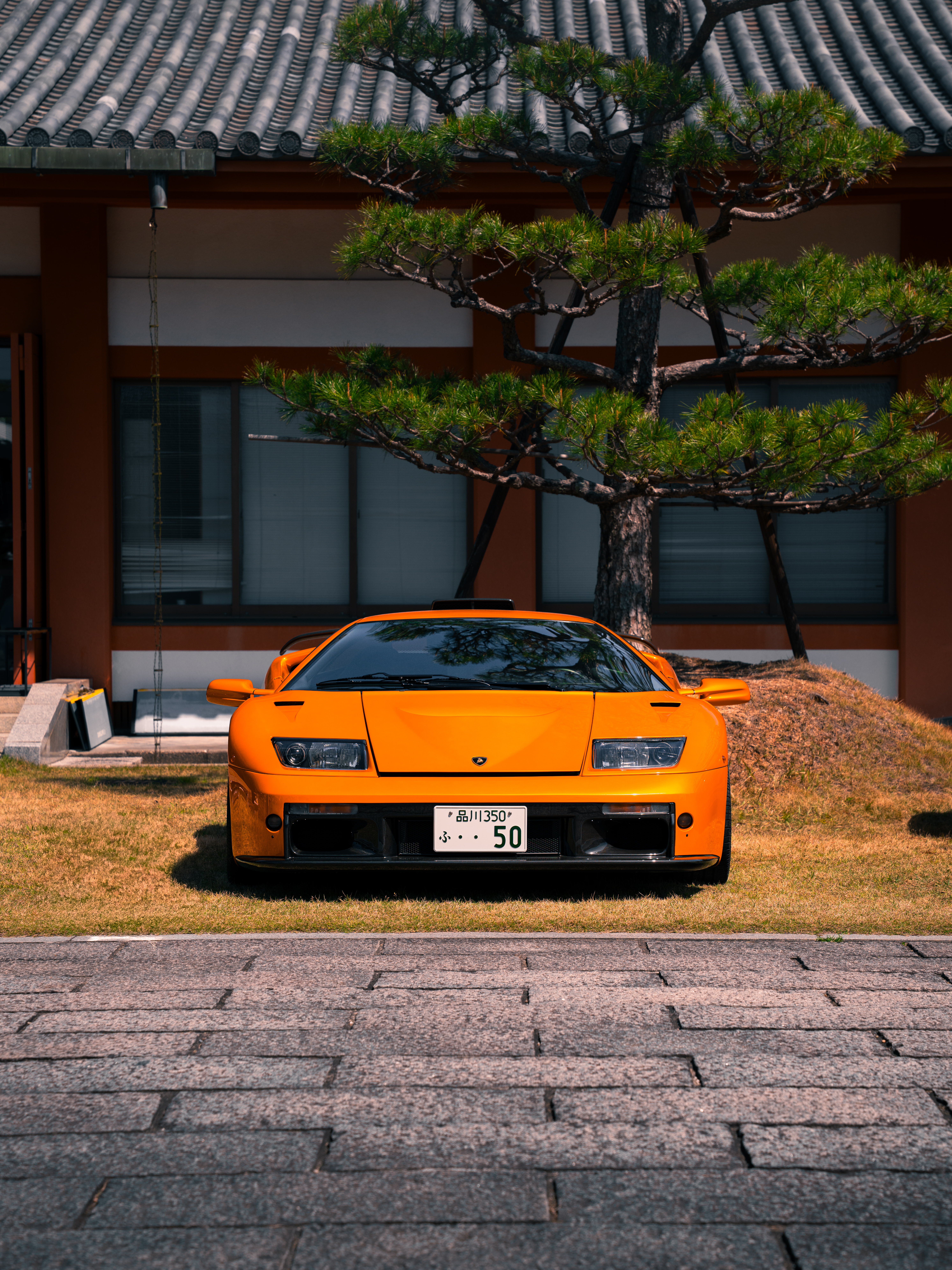

Concorso d’Eleganza Japan 2026 at Yakushiji Temple in Nara was my first real concours experience, and it immediately felt like the highest level a car event can dress itself up to.
It is not just a car show. It is not a meet. It is not even really a normal exhibition.
A concours d’elegance, literally a “competition of elegance,” traces its roots back to 17th-century France, when aristocrats would parade ornate horse-drawn carriages through parks and gardens. Over time, the horses disappeared, the carriages became automobiles, and the idea evolved into something more intense: a beauty contest for machines that also happen to carry engineering, history, culture, restoration, ownership, and obsession on their polished shoulders.

Until this year, I had never been to one.
That changed in 2026, when I was able to attend Concorso d’Eleganza Japan at Yakushiji Temple in Nara.
And honestly, it was everything I expected it to be.
Maybe a little more.
A World Heritage Temple, a Perfectly Dressed Car Event

The 2026 edition of Concorso d’Eleganza Japan took place on April 11 and 12 at Yakushiji Temple, a World Heritage site in Nara and the head temple of the Hosso school of Buddhism.
There is something almost ridiculous about that sentence.
Yakushiji is not just a beautiful backdrop. It is a place with more than 1,300 years of history, originally established by Emperor Tenmu in 680 to pray for the recovery of his consort, who later became Empress Jito. It is the kind of location that already carries its own gravity before a single car enters the grounds.
Then Concorso added some of the rarest, most elegant, most historically significant cars in the world.

That could have gone wrong very easily.
A normal car event inside a temple could feel forced. Worse, it could feel tasteless. But this did not. Somehow, the event managed to place automotive history next to Japanese history without either one trying to overpower the other.
The organization was impeccable, the setting was outstanding, and the car selection was annoyingly well curated.
I say “annoyingly” because when a selection is this good, you cannot even comfortably complain. Every time I thought I had found the car I wanted to spend the most time with, I would turn around and see something else that made me question my priorities.
Nara Hit Me Harder Than Expected

I am partial to Kansai.
I lived in Kyoto, and while Nara is obviously its own world, being back in that part of Japan re-ignited a lot of nostalgia for me. The air feels different there. The pace feels different. Even the silence feels different.
But that is not why I liked Concorso so much.
The setting helped, of course. It is impossible to separate the cars from the location when the location is Yakushiji Temple. Still, the reason this event worked was not just because someone parked expensive cars in front of an old building.
It worked because the entire atmosphere was built around respect.

Respect for the venue. Respect for the cars. Respect for the owners. Respect for the people who restored them, preserved them, transported them, judged them, photographed them, and stared at them for far too long.
I was there as media, which still feels strange to say.
For someone who does what I do, just being there with that access was already a massive mind-bend. I have been around a lot of cars in Japan. I have seen rare things, met important people, and somehow ended up in situations that younger me would have never believed possible.
But Concorso had a different type of weight.
This was not loud. It was not chaotic. It was not trying to impress you by force.
It just existed beautifully, and that was enough.
The Car Selection Was Dangerous

The exhibited cars ranged from pre-war icons to post-war sports cars, competition machines, elegant touring cars, Lotus legends, and 21st-century supercars.
That range alone made the event special.


There was an 1886 Benz Patent-Motorwagen, which is basically where the story of the automobile begins. There were pre-war Rolls-Royces, Bentleys, Fiats, Lancias, and Aston Martins. There were delicate Italian sports and competition cars, the kind of machines that make you afraid to breathe too close to them.

Then the post-war selection came in hard.
A Ferrari Dino 246 GT. A Lamborghini Miura P400SV. A Maserati Ghibli SS. A Lamborghini Countach LP400 S. A Porsche 904 Carrera GTS. A Mazda RX-792P. A Honda NSX Type S Zero.

And then, because apparently the event wanted to make sure nobody remained emotionally stable, the 21st Century Super Car Class included a Lexus LFA, Ferrari LaFerrari, Ferrari J50, Ferrari Monza SP1, Porsche 911 Reimagined by Singer Classic Turbo, and Maserati MCXtrema.

It was not simply rare cars thrown together for shock value.
The field had rhythm. It moved from early automotive history to coachbuilt elegance, from tiny Italian competition cars to Japanese engineering statements, from handmade sculpture to carbon fiber theater.
A concours lives or dies by curation.
This one had curation.
The LFA Moment I Did Not Expect

Out of all the cars there, one ended up becoming personally significant for a reason I did not expect.
The Lexus LFA.
The LFA is already one of those cars that does not behave like a normal supercar in people’s minds. On paper, it is a V10 Lexus supercar. In reality, it has become almost mythical.
Part of that mythology comes from the sound.


And at Concorso d’Eleganza Japan 2026, I somehow ended up speaking with Tanahashi-san, the chief engineer of the LFA.

I asked him to choose only three features of the LFA that he loves most. He had a hard time narrowing it down, which is probably the correct answer from the man who spent so much of his life creating it.
At the top, unsurprisingly, was the engine sound.
He also mentioned engine responsiveness and drivability, but the sound remained central. That is the thing that made the LFA a legend. It is the part of the car that reached beyond numbers and entered emotion.
Tanahashi-san told me that it took around 10 years to perfect that sound, basically the full development cycle of the car. I asked him if he thought the result was perfect.
He said yes.
Perfect.
That word matters more when it comes from the person who had to live with every compromise, every development issue, every internal battle, and every obsessive detail.
He also told me he gave the LFA its “roar of an angel” nickname himself. Later, some people mentioned that a poet had used a similar expression before, but he did not know that at the time.
That, to me, made it even better.
Sometimes a machine earns its name before the world knows what to do with it.
Buddha’s Palm
One of my favorite things Tanahashi-san said was not really about sound.
It was about the way the LFA supports the driver.
He described the car as something that helps the person behind the wheel, almost like “Buddha’s palm.”
The idea, as I understood it, was that the driver can push, explore, and enjoy the car, but in the end the car is there to support them. Not to punish them. Not to scare them just for the sake of drama.
The car’s character is not aggression for aggression’s sake.
It is control. Confidence. Trust.
I asked whether he sees the LFA more as a road car or a track car. His answer was more nuanced than a simple either-or.
He said the car is better on track if you want to experience its dynamic performance. That makes sense. A track gives you space to understand what the chassis, engine, and response can really do.
But for 100 percent driving satisfaction, not aggressive handling, he said the LFA is well tuned and enjoyable on the road.
That answer stuck with me.
The LFA was not built just to post numbers. It was built to create a relationship between driver and machine. And when the man behind the car explains it that way, the whole thing starts to feel less like engineering and more like philosophy.
Which, considering where we were standing, felt very appropriate.
The People Are Part of the Event
What many people do not realize, and I did not fully realize either, is that a concours is not just about the cars.
Yes, some absolutely insane vehicles appear. That part is obvious.
But the people are just as important.
At Concorso d’Eleganza Japan, I met car owners from around the world, photographers, artists, judges, collectors, creators, and people whose life stories seemed to intersect with car culture in ways that were much deeper than simple ownership.

That is the invisible part of an event like this.
At a normal car show, you often look at the car first and maybe learn about the person later. At a concours, the owner, the history, the restoration, the lineage, and the presentation all become part of the object.
A car is not just a car there.

It is a story that survived.
Sometimes it survived war. Sometimes neglect. Sometimes changing taste. Sometimes financial ruin. Sometimes the simple reality that most people do not preserve things unless someone is obsessed enough to care.
The event was elegant, but underneath the elegance was something very familiar.
People being weirdly, deeply, beautifully obsessed with cars.
That is home.

Nighttime at Yakushiji
The daytime show field was already special, but the nighttime program changed the entire atmosphere.
The Night Time Special Celebration began around sunset and continued into the magic hour and after dark, inside temple grounds that are normally not open to the public at night.

That made the whole experience feel like it existed outside normal time.
During the day, you appreciate the lines, the paint, the chrome, the stance, the proportions. At night, the cars become more theatrical. Reflections get deeper. Headlights and temple lighting start doing things that make photographers lose their minds. The architecture becomes less of a backdrop and more of a stage.
Then came the runway show.

One by one, the cars were introduced as moving museum pieces, rolling through the illuminated setting of Yakushiji. This is where the event truly stopped feeling like an exhibition and became a ceremony.
It was not about speed. It was not about revving. It was not about showing off in the usual car event way.
It was presentation.

And because the cars were moving, even slowly, they became alive in a way static displays cannot fully achieve.
Some cars are beautiful when parked.
Some cars only fully explain themselves when they move.

Concorso understood that.
The Award Ceremony Was Not an Afterthought
The award ceremony was also on par with the rest of the event, if not above it.
That is rare.
At many events, the award ceremony feels like something that happens because it has to. Here, it felt like part of the cultural experience.
We witnessed performances from karate athletes, as well as the presentation of rare kimono cloths. Once again, the event did not simply rely on the cars to carry everything. It created an environment where Japanese culture and automotive culture could stand side by side without feeling like one was being used as decoration for the other.
The judging itself was serious.
Concorso d’Eleganza Japan 2026 brought together a panel that included major names from the international car world, including Shiro Nakamura, JP Rathgen, Alberto Scuro, Alessandra Giorgetti, Andrea Zagato, Duccio Lopresto, Fabio Filippini, Francesca Parolin, and Ikuo Maeda.
The top honor, Best of Show, went to the 1928 Rolls-Royce Experimental Sports Phantom by Jarvis, also known as “17EX,” entered by Yohan Poonawalla.

That car also won the Pre-War Elegant Class.
Other class winners included the 1939 Zanussi Fiat 500 Sport, 1948 Fiat 1100 S MM “Gobbone,” 1964 Porsche 904 Carrera GTS, 1979 Lamborghini Countach LP400 S, 2001 Honda NSX Type S Zero, 1950 Fiat 1100E Cabriolet Stabilimenti Farina, 1950 Ferrari 195 Inter Berlinetta, 1961 Lotus Elite, and the 2011 Lexus LFA.
The People’s Choice Award went to the Ferrari LaFerrari entered by The Magarigawa Club.
That last one felt very on-brand for the general public.
Why This Event Worked
A concours at a World Heritage temple in Nara, with pre-war Rolls-Royces, Italian coachbuilt cars, Japanese legends, hypercars, a nighttime runway, sake lounges, cultural performances, international judges, and people dressed like the concept of money learned manners.
On paper, it almost sounds too much.
But in person, it made sense.
Concorso d’Eleganza Japan did not feel like it was trying to imitate Pebble Beach, Villa d’Este, or any other famous concours. It felt like it was trying to create something that could only happen in Japan.
More specifically, something that could only happen in Nara.
That gave the event a calmness I did not expect.
The cars were absurdly rare, but the place kept them humble. The temple did not care how valuable anything was. It had seen enough centuries to make even the most important car feel young.
And somehow, that made the cars more beautiful.
Final Thoughts
I went to Concorso d’Eleganza Japan 2026 expecting rare cars.
I got that.
I expected an elegant event.
I got that too.
What I did not expect was to leave with the feeling that I had witnessed something more layered than a car show. It was part concours, part cultural event, part museum, part private dream, and part reminder that cars can still carry meaning when they are presented with care.
Being there as media was surreal.
Meeting Tanahashi-san and talking about the LFA was surreal.
Walking through Yakushiji Temple while some of the world’s most beautiful machines sat quietly under the Nara sky was surreal.
But the best part is that none of it felt empty.
There was substance behind the elegance.
History behind the shine.
People behind the machines.
And in the end, that is what makes an event like this worth remembering.

Concorso d’Eleganza Japan 2026 was not the loudest event I have attended. It was not the craziest. It was not the most chaotic.
It was something else.
It was dressed perfectly.
And it knew exactly where it was.
Leave a Reply